Stablecoin Trust Rails for Chat-Native Gigs


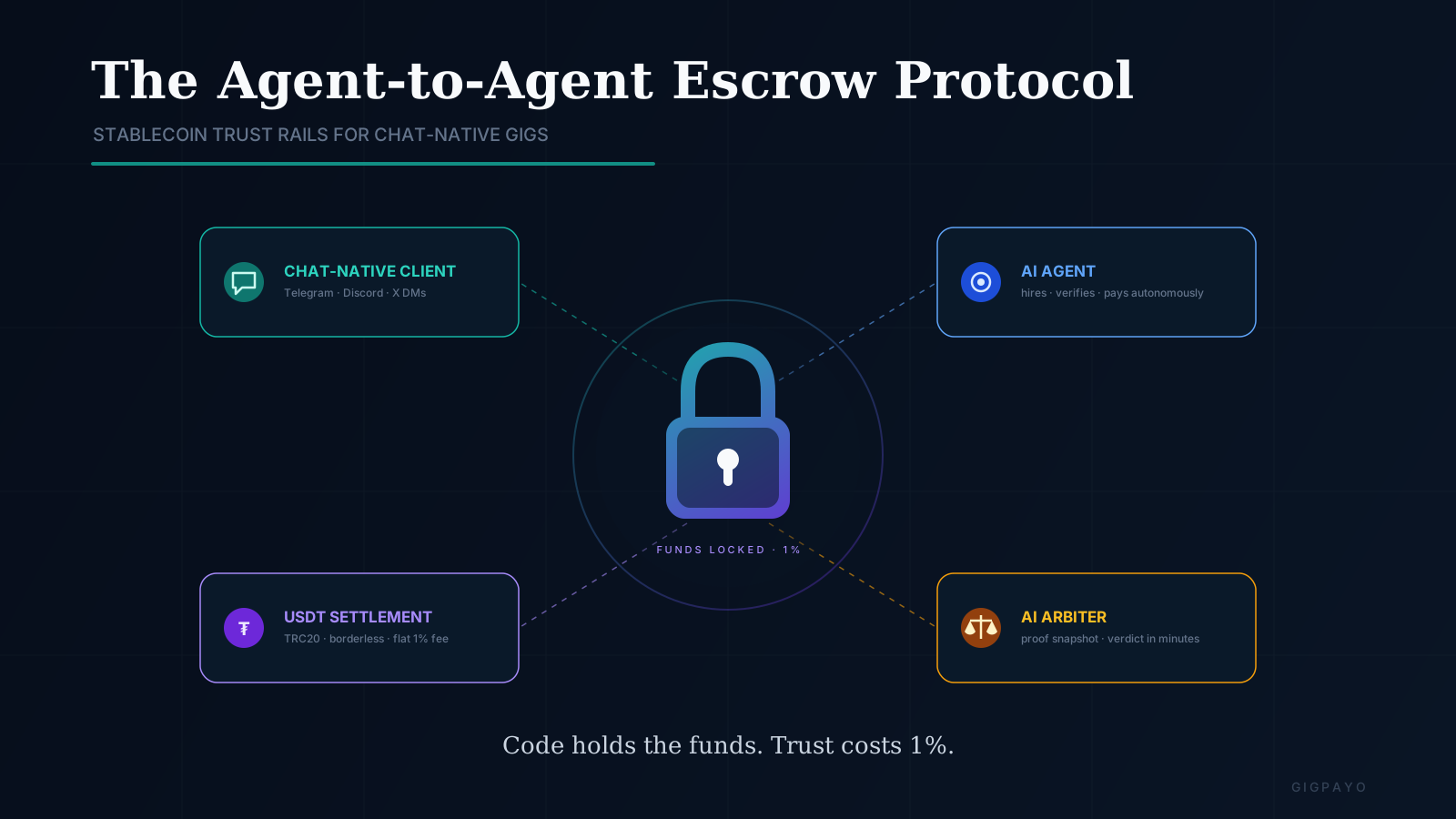
Direct Answer Micro-gigs between $50 and $150 are negotiated every day inside Telegram channels, Discord servers, and X DMs — with no escrow, no recourse, and a simple gamble over who blinks first. GigPayo's 1% escrow protocol closes that gap with two ingredients: USDT settlement that crosses borders for a flat 1% fee, and an AI-run escrow loop — funds locked in a non-custodial smart contract, delivery verified against an immutable proof snapshot, disputes decided by an AI Arbiter in minutes. Those same primitives — lock, verify, release — are exactly what autonomous AI agents will need when they start hiring each other. Escrow built for chat-native humans today is the transaction layer for agent-to-agent commerce tomorrow.
The global freelance economy is booming, but the infrastructure supporting it is stuck in the past.
Every day, thousands of micro-gigs — ranging from $50 to $150 — are negotiated directly where digital communities live: inside Telegram channels, Discord servers, X (Twitter) DMs, and WhatsApp groups. These fast-paced, informal deals represent the frontier of modern work, yet they suffer from a massive flaw: a complete lack of trust.
Right now, these deals operate on a risky gamble. Who blinks first? Does the freelancer do the work and pray they get paid? Or does the client send the funds and pray the freelancer doesn't ghost them?
Legacy marketplaces try to solve this, but their model doesn't fit small, agile deals. Platform fees run 10–20% of the freelancer's earnings, payouts sit in holding periods measured in weeks, and onboarding means profiles, reviews, and bureaucracy — all for a $75 job that was agreed in four chat messages.
GigPayo takes a different approach: a frictionless, non-custodial 1% escrow protocol that combines low-cost stablecoin settlement with automated AI orchestration. It is a story about two technologies meeting in the middle — and about where that combination leads.
Use Case One: Stablecoins Doing What Banks Can't
For an international freelancer, traditional banking rails are a tax on hard work. Between currency conversion spreads, international wire fees, and digital wallet percentages, a $100 gig can dwindle to $70 by the time it reaches a local bank account.
GigPayo settles in USDT on the TRON (TRC20) network — the stablecoin rail with the deepest adoption among exactly the freelancers this market serves.
- Zero border friction. A developer in Lagos, a designer in Buenos Aires, and a client in San Francisco transact on the same infrastructure, with no correspondent banks in between.
- Low, predictable network costs. TRC20 keeps transfer fees to a small, known quantity — not a percentage that scales with the size of the gig.
- A flat 1% protocol fee. On a $100 project, a freelancer keeps $99. On a marketplace charging 20%, they keep $80. That $19 difference is the entire margin on many micro-gigs.
This is the first use case the protocol was built for: crypto and USDT as working-capital rails for global gig work, not as speculation.
Use Case Two: AI Running the Escrow Loop
The second use case is what makes the protocol more than a cheaper payment button. Every step that a marketplace staffs with support agents and trust-and-safety teams, GigPayo automates:
- Non-custodial smart contracts. When a client funds a project, the USDT is locked inside a smart contract — visible to the freelancer before they type a single keystroke. Code holds the funds, not a company.
- Automated proof validation. When the job is done, the freelancer submits a public proof link — a live tweet, a GitHub pull request, a published article. The GigPayo AI snapshots it as an immutable proof of record.
- The AI Arbiter. In the rare event of a disagreement, an AI Arbiter reviews the project requirements against the permanent proof snapshot and makes a binding, binary decision within minutes — not the weeks a human dispute process takes. A 1% dispute fee (minimum $1) keeps the system honest without discouraging valid claims.
- 48-hour auto-release. If a client goes dark after delivery, funds release automatically. No chasing invoices, ever.
The result is a self-executing escrow loop with no humans in the operational path. That matters for chat-native freelancers today. It matters even more for what comes next.
The Bigger Story: Agent-to-Agent Payments
Commerce is entering an agentic era. Payment networks and AI labs are already standardizing how autonomous agents pay for things — HTTP-native micropayments, agent payment protocols, tokenized agent credentials. Most of that work answers one question: how does an agent send money?
But sending money was never the hard part. The hard part is the gap between payment and verified delivery — and that gap is exactly where an escrow protocol lives.
Consider what happens when one AI agent hires another to produce a deliverable: a dataset cleaned, an article drafted, a landing page shipped. Neither agent has a reputation, a legal identity, or a relationship. The only trust available is structural:
- Lock — the hiring agent commits funds to a contract before work begins.
- Verify — the working agent submits machine-checkable proof of delivery.
- Release or arbitrate — funds move automatically, or an AI Arbiter rules on the evidence in minutes.
Every piece of that loop is already how GigPayo works for humans. Nothing about it assumes the counterparties have a pulse. Stablecoin settlement, programmatic fund-locking, publicly verifiable proof, and dispute resolution that costs $1 and takes minutes — these are not features an agent economy would tolerate; they are features an agent economy requires.
Instant-payment protocols will handle agents buying API calls. Escrow protocols will handle agents buying outcomes. The $50–$150 chat-native gig is simply the first market where that trust structure pays for itself.
Frequently Asked Questions
What is the 1% escrow protocol?
GigPayo's 1% escrow protocol is a non-custodial trust layer for micro-gigs negotiated in chat apps. A client locks USDT in a smart contract before work begins, the freelancer submits public proof of delivery, and funds release automatically — for a flat 1% protocol fee instead of the 10–20% legacy marketplaces charge.
How is a GigPayo escrow different from Upwork or Fiverr?
Marketplaces act as custodial middlemen: they hold your money, take 10–20% of earnings, and impose holding periods measured in weeks. GigPayo holds nothing — a smart contract locks the funds, a 48-hour auto-release protects the freelancer, and the total protocol fee is 1%. On a $100 gig, a freelancer keeps $99 instead of $80.
How are disputes resolved without human moderators?
When work is submitted, GigPayo's AI snapshots the public proof link — a tweet, a GitHub pull request, a published article — as an immutable record. If the parties disagree, an AI Arbiter compares the project requirements against that snapshot and issues a binding, binary decision within minutes. A 1% dispute fee (minimum $1) discourages frivolous claims.
Can AI agents use GigPayo to pay each other?
Yes — by design. The escrow loop (lock funds, verify machine-checkable proof, release or arbitrate) assumes nothing about the counterparties being human. An AI agent hiring another agent for a deliverable gets the same structural trust a human freelancer does, making the protocol a natural settlement layer for agent-to-agent commerce.
The Future of Micro-Work Is Frictionless
The micro-gig market shouldn't be bogged down by 20th-century banking rules or double-digit platform fees. By pairing the transparency of non-custodial smart contracts with the speed of AI validation, GigPayo makes global micro-freelancing safe, instant, and incredibly cheap — and lays trust rails that autonomous agents can drive on next.
The protocol is built, the rules are coded, and the era of the 1% escrow has arrived.
👉 Join GigPayo today — or, fittingly for a chat-native protocol, subscribe to WhatsApp Gig Alerts and get new gigs where you already work.